close white icon
close white eyes
Recognizing Digital Abuse in a Relationship: When Technology Becomes a Tool for ControlRecognizing Digital Abuse in a Relationship: When Technology Becomes a Tool for Control

October 27, 2026

Recognizing Digital Abuse in a Relationship: When Technology Becomes a Tool for Control

It might start with something that seems harmless.

“Who are you texting?”

“Why didn't you answer my call?”

“Send me your location so I know you're safe.”

At first, these questions might feel like concern, love, or protectiveness. But when checking in becomes constant monitoring, when privacy leads to arguments, or when saying no comes with consequences, something isn't right.

Digital abuse doesn't always look like a threat. Sometimes, it looks like someone who wants access to every part of your life. And because technology is so deeply connected to how we communicate, work, and maintain relationships, this kind of abuse can be difficult to recognize.

‍

What Is Digital Abuse in a Relationship?

Digital abuse happens when someone uses phones, social media, messaging apps, or other technology to monitor, intimidate, harass, or control another person.

It can happen in marriages, dating relationships, and even after a relationship has ended.

Unlike other forms of abuse, digital abuse can follow someone almost everywhere. A woman may leave an uncomfortable situation physically, only to continue receiving threatening messages, repeated calls, or demands to explain where she is and who she's with.

The issue isn't the technology itself. It's how someone chooses to use it to gain power and control over another person.

‍

Why Digital Abuse Can Be Difficult to Recognize

One of the most confusing things about digital abuse is that it can be disguised as love.

“I only check your phone because I care about you.”

“I worry when I don't know where you are.”

“Couples shouldn't have secrets.”

These statements can make controlling behaviour seem reasonable, especially when trust, loyalty, and commitment are important values in a relationship.

For some women, cultural expectations, family pressures, or concerns about community judgment can make it even harder to question these behaviours.

But care should not require constant surveillance. Trust should not depend on surrendering your privacy.

A healthy relationship makes room for both connection and independence.

‍

7 Signs of Digital Abuse You Shouldn't Ignore

Digital abuse isn't always obvious. Some behaviours may seem normal at first in a relationship, especially when they're presented as signs of love or concern.

Here are seven warning signs worth recognizing.

‍

1. They Demand Access to Your Phone or Passwords

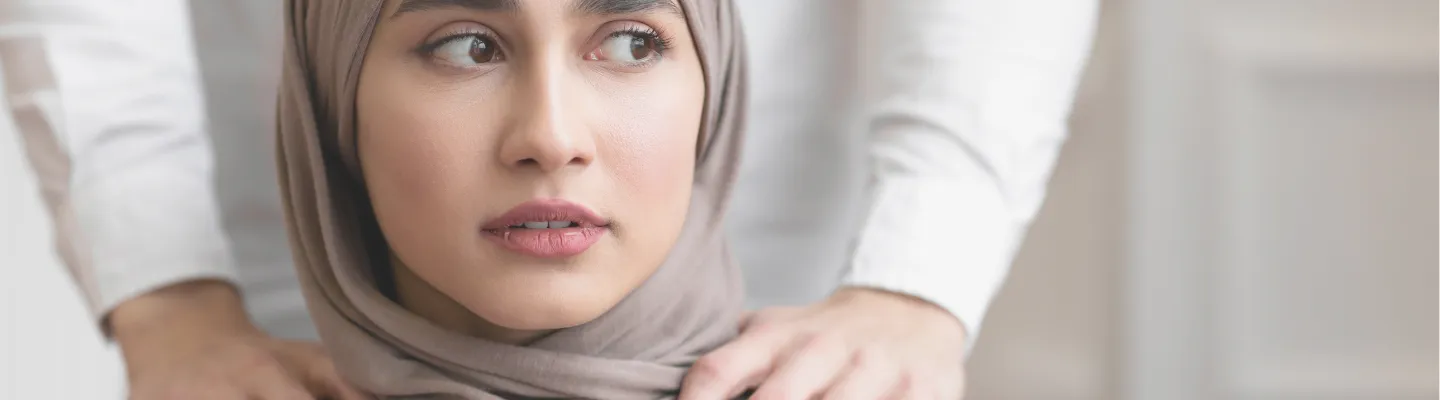
There's a difference between choosing to share something with your partner and feeling pressured to do so.

A partner may insist on knowing your phone password, reading private conversations, or accessing your social media accounts.

They might say, “If you have nothing to hide, why won't you show me?”

But privacy is not the same as secrecy, and being in a relationship doesn't mean giving up your right to personal boundaries.

Everyone deserves a sense of independence and personal space, even in the closest relationships. You might have private conversations with friends, personal thoughts you're not ready to share, or simply want to use your phone without someone checking over your shoulder. None of these things mean you're hiding something or being dishonest.

Healthy relationships are built on trust, not constant access. Trust means respecting each other's boundaries without demanding proof of loyalty. When a partner insists on reading your messages, knowing your passwords, or checking your phone, it can create an environment where you feel constantly watched or pressured to explain yourself.

You should be able to maintain your privacy without feeling guilty, afraid, or like you have something to prove.

‍

2. They Constantly Monitor Your Location

Sharing your location can be helpful when it's mutual and voluntary. It can offer peace of mind, especially when traveling or making sure someone gets home safely.

But when someone demands to know where you are at all times, questions every stop you make, or becomes angry when your location isn't available, that behaviour can become controlling.

Over time, you may start feeling like you need permission to go places or that you have to justify every decision. You might avoid making spontaneous plans, visiting friends, or stopping somewhere on your way home because you're worried about how your partner will react.

What should be a simple way to stay connected can become a way to monitor and restrict your independence.

‍

3. They Expect Immediate Replies

Maybe you're at work, spending time with family, praying, or simply taking a moment for yourself. Yet your phone keeps ringing. When you finally respond, you're met with accusations, anger, or guilt.

A partner might question why you took so long to reply, accuse you of ignoring them, or assume you're hiding something. What starts as a few missed calls or unanswered messages can gradually turn into an expectation that you must always be available.

Over time, you may find yourself constantly checking your phone, even when you're busy, or feeling anxious when you can't respond immediately. You might interrupt conversations, rush through activities, or feel the need to explain every missed call just to avoid an argument.

Healthy communication allows room for both connection and personal space. Being in a relationship doesn't mean you have to be reachable at all times, and a delayed response should never become a reason for accusations, punishment, or intimidation.

‍

4. They Control What You Post or Who You Follow

Digital abuse can also involve controlling someone's online identity and how they interact with others on social media.

A partner might dictate which photos you can share, demand that you delete certain contacts, question who likes or comments on your posts, or become upset when you interact with certain people online. They may insist that these restrictions are about respect, loyalty, or protecting your relationship.

But there's a difference between discussing boundaries together and one person deciding what the other is allowed to do.

Over time, you might begin second-guessing everything you post or share. You may delete photos, avoid responding to messages, unfollow friends, or stop using social media altogether because you're worried about your partner's reaction.

What looks like a personal choice from the outside may actually be the result of pressure behind closed doors.

When someone feels they must constantly change their online behaviour to avoid arguments, accusations, or punishment, it can gradually affect their confidence, independence, and connections with others.

A healthy relationship should allow both partners to maintain their individuality, friendships, and personal boundaries, online and offline.

‍

5. They Use Private Information Against You

In a relationship, it's natural to share personal thoughts, photographs, private conversations, and things you might not feel comfortable sharing with anyone else. But when a partner uses that trust against you, it can become a form of digital abuse.

An abusive partner might threaten to share private messages, personal photographs, or sensitive information if you don't do what they want. They may bring up things you've shared in confidence during arguments or threaten to expose personal details to your family, friends, or community.

For some women, these threats can be particularly frightening when they involve cultural expectations, family relationships, or concerns about their reputation.

Even if a partner never follows through on these threats, the fear of what they might do can be enough to keep someone silent or compliant.

You may find yourself agreeing to things you're uncomfortable with, avoiding disagreements, or staying in a relationship because you're afraid of how your partner might use your personal information against you.

Trusting someone with your private life should never give them the power to control it. A healthy relationship is one where personal information is treated with care and respect, not used as leverage during disagreements or as a way to maintain control.

‍

6. They Use Technology to Isolate You

Digital abuse isn't always about monitoring your activity. Sometimes, it's about limiting your ability to connect with others.

A controlling partner may block contacts, delete messages, impersonate you online, or interfere with your conversations. They might pressure you to stop communicating with certain friends or family members, leave group chats, or withdraw from online communities.

In some cases, they may go further by taking away your phone, locking away your devices, restricting internet access, or controlling when and how you communicate with others.

Over time, you may find yourself increasingly disconnected from the people you once relied on. You might stop reaching out to avoid arguments or because you're worried your conversations are being monitored.

This isolation can make it harder to recognize unhealthy patterns, seek advice, or ask for help.

Healthy relationships should strengthen your connections with others, not make you feel cut off from the people who care about you.

‍

7. The Monitoring Continues After Separation

Ending a relationship doesn't always end digital abuse.

An abusive former partner may continue sending unwanted messages, monitoring social media, creating new accounts to make contact, or using shared devices and accounts to track someone's activities.

They may repeatedly call from different numbers, contact friends or family to find out where you are, or use information shared online to keep track of your life. In some cases, they may use shared passwords, family accounts, or location-sharing features to continue accessing information without your knowledge.

For women who have left an abusive relationship, this ongoing monitoring can be especially distressing. Even after creating physical distance, they may feel like they are still being watched, making it difficult to regain a sense of privacy, independence, and safety.

You might hesitate before posting a photo, visiting a familiar place, or reconnecting with friends because you're worried that your former partner will find out.

Leaving a relationship should not mean having to disappear from your own life to feel safe.

If the monitoring or harassment continues after separation, it's important to recognize that this behaviour can still be a form of abuse. You deserve support in protecting your privacy, establishing boundaries, and rebuilding your life without fear.

‍

What Can You Do If You're Experiencing Digital Abuse?

If any of these experiences sound familiar, you don't have to decide what they mean for your relationship immediately. Recognizing a pattern of control is an important first step.

If it is safe to do so, consider speaking with someone you trust or reaching out to an organization that supports women experiencing abuse.

You may also want to seek guidance on protecting your digital privacy. However, making sudden changes to passwords, accounts, or location settings can sometimes alert an abusive partner and increase the risk of harm.

Your safety matters more than making immediate changes to your devices or accounts.

If you believe someone is monitoring your phone or online activity, consider using a safer device to seek support.

‍

You Deserve Safety Online and Offline

Abuse doesn't have to leave a physical mark to have a lasting impact.

Living with constant monitoring, accusations, or threats can affect a woman's confidence, independence, relationships, and emotional well-being.

At Nisa Foundation, we recognize that abuse can take many forms, including behaviours that are difficult for others to see.

Through our helpline, shelter and housing support, and mental health services, we support women as they navigate difficult circumstances and work toward safer, more independent lives.

Whether you're beginning to question something in your relationship or looking for support after experiencing abuse, you deserve to be heard and treated with dignity.

Love should never make you feel like you are being watched. And safety should never come at the cost of your freedom.

‍

Recent Articles

Oct

When a Partner Uses Your Immigration Status as a Threat

For some immigrant and newcomer women, these are not just hurtful words.
image

Oct

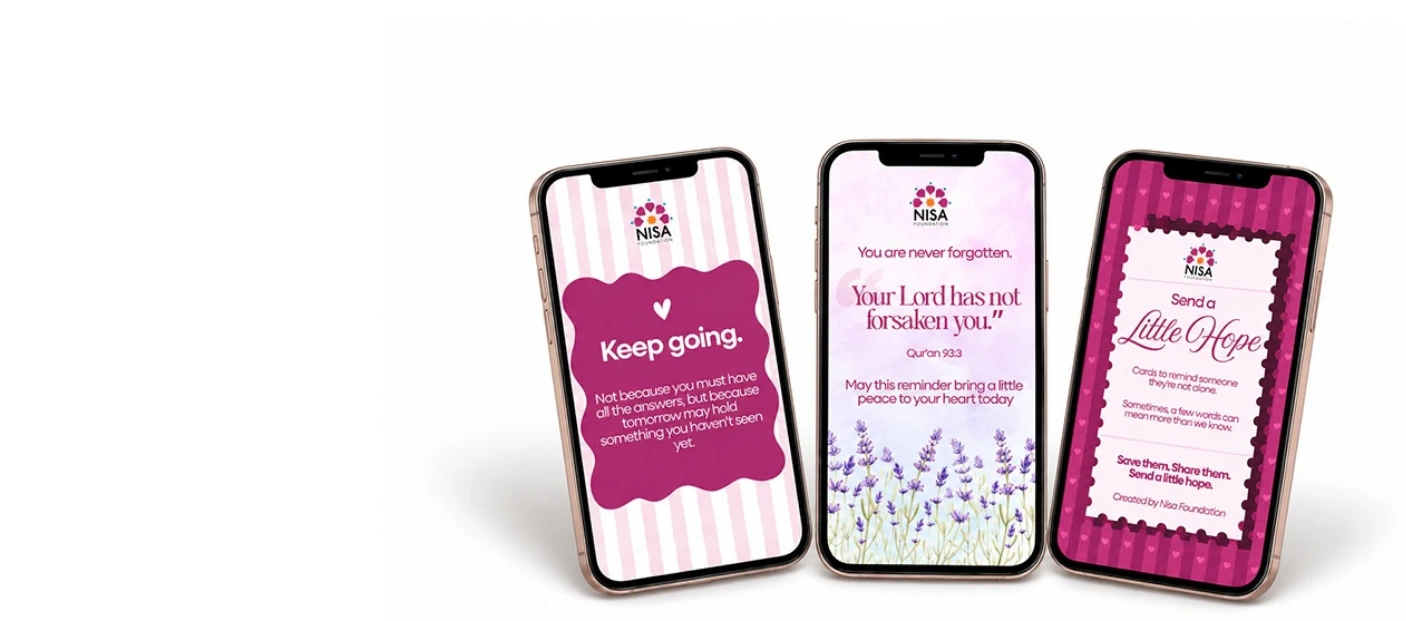
Send a Little Hope: Free Cards to Share Comfort and Encouragement

Sometimes, a few words can mean more than we realize.
image

Oct

Understanding Post-Separation Abuse: When Leaving Doesn’t End the Abuse

Leaving an abusive relationship can take enormous courage.
image

Sep

12 Months of Hope: How Monthly Giving Helps Women Rebuild

A safe bed can bring peace for one night. A compassionate voice can offer hope in a difficult moment. A counselling session can begin the healing process.
image

Sep

Mental Health Check-In: 8 Questions to Ask Yourself This Month

When was the last time you asked yourself how you were actually doing?
image

Sep

Why Asking for Help Can Feel So Hard for Muslim Women

For many Muslim women, reaching out for mental health support can feel more complicated than recognizing that something is wrong.
image

Sep

Raising Rijaal: Helping Muslim Boys Grow Into Men of Character

A boy doesn’t wake up one day and suddenly know how to be a good man.
image

Sep

5 Types of Abuse You Might Not Recognize

Abuse doesn’t always leave a bruise. Sometimes, it looks like a bank account you’re not allowed to access. A phone that’s constantly being checked.
image

Sep

Nisa Warriors Make Waves: $14,960 Raised for Single Mothers at the Al-Noor Dragon Boat Race

On August 1, 2026, the Nisa Warriors took to the water for the Al-Noor Dragon Boat Race at the Welland International Flatwater Centre.
image

Sep

Suicide Prevention: Finding Hope, Support, and a Way Forward

September is Suicide Prevention Month—a time to raise awareness, break stigma, and remind people that support is available.
image

Aug

Back to School After a Difficult Season: Supporting Single Mothers and Their Children

The back-to-school season can bring excitement, new beginnings, and fresh opportunities for children.
image

Aug

How to Help Your Child Adjust to a New School Year

The start of a new school year can bring excitement, but it can also bring uncertainty. New teachers, new classrooms, different routines, changing friendships, and the return of academic expectations can feel overwhelming for children.
image

Aug

Back-to-School Lunch Notes That Make a Difference.

Back-to-school season is filled with new beginnings.
image

Aug

How to Have Meaningful After-School Conversations With Your Child

If this conversation feels familiar, you're not alone.
image

Jul

How Do I Know If I Am Being Spiritually Abused by My Husband?

Marriage in Islam is meant to be a place of peace, compassion, and protection.
image

Jul

Understanding Domestic Violence During Major Sporting Events

As stadiums across Canada erupt in cheers during FIFA, another sound often goes unheard.
image

Jun

The Role of Fathers in Islam

In Islam, fatherhood is a responsibility honoured by Allah ﷻ. A father is not only a provider, but a caretaker, protector, mentor, and source of compassion within the family.
image

Jun

Supporting Children's Mental Health During School Breaks: A Parent's Guide to a Healthy Summer

School breaks are often filled with excitement, family activities, and opportunities for children to relax after a busy academic year.
image

Jun

The Importance of Ashura for the Muslim Ummah

The month of Muharram holds a special place in Islam. It is one of the four sacred months mentioned in the Quran, during which Allah has given special importance to worship, reflection, and avoiding wrongdoing.

image

Jun

Barakah in Ordinary Days

Summer is a time when we can step back and enjoy our days without feeling constantly overwhelmed. It can feel like we have more freedom, more space, and more time to do what we want.
image

May

10 Easy Acts for the First 10 Days of Dhul Hijjah

The first ten days of Dhul Hijjah are among the most sacred days of the entire year in Islam. These are days where every small act of goodness carries multiplied reward, and where believers are encouraged to increase worship, reflection, and sincerity.
image

May

Hajj of the Heart

As the days of Dhul Hijjah begin, Hajj draws near, and the Day of Arafah approaches. From our screens, we watch people circling the Kaabah, taking in every moment. Some of us sit and wonder what it must feel like, while others think back to when they were there, trying to hold onto that feeling.
image

May

Mothers in Islam: A Love That Shapes Our Faith and Our Lives

There is something deeply familiar about the way a mother loves. It’s in the quiet duas she whispers for you when you’re not around.
image

May

Faith & Wellbeing: Mental Health in Islam | Mental Health Awareness Month

May is Mental Health Awareness Month. It is a time where we can educate not only others but ourselves about different types of mental illness
image

Apr

4 Powerful Duas in Islam to Relieve Stress, Anxiety, and Worry

Discover 4 powerful duas from Islam to help relieve stress, anxiety, and worry. Learn their Arabic text, meanings, and how they bring peace and comfort to the heart in difficult times.
image

Apr

Fasting in the First 9 Days of Dhul Hijjah: Is It Required? Rules & Virtues

The first ten days of Dhul Hijjah are among the most blessed and spiritually significant days in Islam. Allah سبحانه وتعالى swears by them in the Qur’an: “By the dawn, and by the ten nights.” (Surah Al-Fajr 89:1–2)
image

Apr

The Last Sermon of Prophet Muhammad (SAW) – Meaning, Lessons & Dhul Hijjah Reflection

As the blessed days of Dhul Hijjah approach, millions of Muslims around the world prepare for a time of reflection, ibadah, and renewal.
image

Apr

The Legacy of Prophet Ibrahim (AS): Sacrifice, Faith & Dhul Hijjah Lessons

What does it truly mean to sacrifice for the sake of Allah? For many of us, sacrifice feels abstract, a concept we associate with Eid al-Adha or the rituals of Dhul Hijjah. But for Ibrahim (AS), sacrifice was a lived reality. His legacy challenges us to rethink our priorities, our attachments, and our willingness to submit to Allah in every aspect of our lives.
image

Apr

What Happens in Dhul Hijjah? Key Events & Significance

Dhul Hijjah is not just the final month of the Islamic calendar, it is one of the most sacred and spiritually powerful times of the year. For Muslims around the world, it is a period of reflection, sacrifice, and deep connection to faith.
image

Apr

Why Victims of Sexual Harassment Don’t Speak Up | Nisa Foundation

Sexual harassment is a deeply rooted issue that affects individuals across workplaces, schools, and communities, right here in Canada. According to a recent Statistics Canada survey, nearly half of Canadian women (47%) reported ever experiencing harassment or sexual assault in the workplace.
image

Apr

6 Simple Stress Management Tips for Stress Awareness Month | Nisa Foundation

Stress is something we all experience at different points in life. A small amount of stress can sometimes help motivate us, but when it becomes too much for too long, it can affect our well-being and lead to burnout.
image

Apr

Shawwal After Ramadan: Blessings, Fasting 6 Days & Spiritual Growth

After the blessed month of Ramadan ends, many of us feel a deep sense of longing. We miss the spiritual highs, the nightly prayers, the sense of community, and the closeness to Allah that Ramadan brings. Yet, in Allah’s mercy, the opportunity for continued reward and spiritual growth does not end with Ramadan.
image

Mar

5 Habits to Maintain After Ramadan

Ramadan is a time of spiritual reflection, discipline, and self-improvement. But as the month ends, it’s common to slip back into old routines.
image

Mar

Celebrating Eid at Nisa Homes: Creating Joy and Dignity for Women and Children 🌙

Eid is one of the most joyful times of the year, and at Nisa Homes special care is taken to ensure it feels just as meaningful for the women and children living in the shelter.
image

Mar

The Sunnah of Eid: Celebrating Eid al-Fitr the Prophetic Way

After a month of fasting and reflection during Ramadan, Eid al-Fitr arrives as a beautiful day of gratitude and celebration. It’s a time when families gather, communities come together, and hearts feel lighter after the effort of the past month.
image

Mar

5 Laylatul Qadr Activities: Teaching Kids About the Last 10 Nights of Ramadan

The last 10 nights of Ramadan are the most spiritually significant nights of the entire month. Among them is Laylatul Qadr (The Night of Power), a night described in the Qur’an as better than a thousand months.
image

Mar

Maximizing Ibadah in the Last Ten Nights of Ramadan and Seeking Laylatul Qadr

Make the most of the last ten nights of Ramadan. Learn how to maximize worship through night prayers, Quran recitation, dua, charity, and seeking Laylatul Qadr with spiritual tips from Nisa Foundation. 
image

Feb

Staying Healthy in Ramadan: Simple Ways to Care for Your Body and Mind

Discover practical health, nutrition, sleep, and self-care tips to stay energized and balanced during Ramadan while managing a busy routine. A complete wellness guide for a healthy Ramadan. 
image

Feb

The Power of Dua in Ramadan

Dua is one of the most powerful acts of ibadah in Islam. It is more than simply asking for help, it is a heartfelt conversation with Allah, a way to pour out your hopes, fears, gratitude, and dreams.
image

Feb

Easy Hydrating Drink Recipes to Try This Ramadan

Looking for easy Ramadan drink recipes? Try these hydrating drinks perfect for iftar and suhoor. Stay refreshed and healthy during this winter Ramadan with simple, nourishing beverages
image

Feb

5 Do’s and Don’ts of Ramadan Every Muslim Should Know

Ramadan is more than a month of fasting, it is a time of spiritual renewal, compassion, and deep connection with Allah (SWT).
image

Feb

Ramadan on a Budget: Meaningful Tips for a Fulfilling Month

Ramadan is a beautiful time of reflection, gratitude, and spiritual growth. But, between shopping for iftar, hosting family, and preparing for Eid, it can quickly become expensive
image

Feb

3 Virtues of Feeding a Fasting Person This Ramadan

Discover the 3 powerful virtues of feeding a fasting person this Ramadan. Earn rewards, share compassion, and help those in need with Nisa Foundation’s Donate an Iftar initiative.
image

Feb

Quick and Healthy Suhoor Ideas for a Nourishing Ramadan Morning

Discover 3 quick and healthy Suhoor recipes to start your fast with energy and focus. Easy-to-make meals including Mango Lassi Oats, Talbina, and Date & Nut Energy Bites.
image

Jan

Talking to Kids about Ramadan - For Struggling Parents

Ramadan is a special time for reflection, gratitude, and family connection. But what if you’re personally struggling, emotionally, spiritually, or physically?
image

Jan

7 Goal-Setting Tips That Will Transform Your Ramadan

Make the most of Ramadan with practical goal-setting tips! Boost your spiritual growth, daily habits, and personal transformation this month.
image

Jan

Can You Fast During Ramadan While Pregnant or Breastfeeding?

Wondering if you can fast during Ramadan while pregnant or breastfeeding? Discover safe tips, trimester advice, and health guidance to protect you and your baby.
image

Jan

5 Ways Ibadah Can Look Different This Ramadan

For many of us, Ramadan is a month of peace, reflection, and renewal.
image

Jan

Difference Between Zakat and Sadaqah

Difference Between Zakat and Sadaqah | Nisa Foundation
image

Jan

Prayer Timings in Ramadan 2026

Iftar and Suhoor timings in Ramadan 2026 | Nisa Foundation
image

Dec

Get Ready for Ramadan 2026

The most awaited month of the year is almost here — Ramadan invites us to pause, reflect, and give from the heart. It’s a time when our faith turns into action, our prayers into hope, and our generosity brings light to women and children whose lives are full of struggle.
image

Dec

Double your Impact and Support Women in Need

As we step into a new year, we’re reminded that not everyone gets to turn the page so easily.
image

Dec

Monthly Donations That Transform Lives

Support women and children in need with your monthly donation. Learn how recurring giving helps shelters, provides safety, and empowers vulnerable families every month.
image

Dec

Standing With Survivors of Domestic Violence

Join the 16 Days of Activism by standing with survivors of domestic violence. Learn why allyship matters and download Nisa Foundation’s free Guide for Allies to take action safely and effectively.
image

Nov

Breaking the Cycle of Abuse

I decided that day would be the last time I was beaten.
image

Nov

Empowering Leaders to Build Safer Communities

In Islam, our leaders — especially our Imams — are more than teachers or speakers. They are guides for the community, helping people through prayer, hardship, and everyday life.
image

Nov

16 Myths About Domestic Violence in Canada

Think you know the truth about domestic violence in Canada? We debunk 16 myths to reveal the realities survivors face every day. 
image

Oct

How to Support Survivors of Gender-Based Violence

Simple, practical ways to support survivors of gender-based violence. Learn how to listen, believe, and connect survivors with resources like Nisa Foundation.
image

Sep

The Hardest Day: A Caseworker’s Reflection

The first day is always the hardest day, a lot of changes and a lot of emotions.
image

Sep

How Childhood Trauma Impacts Health Across a Lifetime

Childhood should be filled with safety, love, and growth. Sadly, for many children, early life is shaped by fear, instability, or abuse.
image

Sep

How to Support Someone Experiencing Suicidal Thoughts: A Compassionate Guide

When someone is struggling with suicidal thoughts, it can feel scary to step in. You might worry about saying the wrong thing or making it worse...
image

Aug

Understanding Suicide & 7 Proven Ways to Cope with Suicidal Thoughts

Suicide is one of the most difficult topics to discuss, yet it’s one that deeply affects individuals, families, and entire communities. The more we understand it, the better equipped we are to respond with compassion, break the stigma, and offer support.
image

Aug

4 Ways to Fall Back into Routine for Back-to-School Success

Ease the transition from summer to school with these 4 simple tips for Muslim families. Build better routines, reconnect with faith, and start the school year strong.
image

Aug

5 Ways to Help Your Child with Back-to-School Anxiety (For Muslim Parents)

Help your child overcome back-to-school anxiety with 5 effective tips for Muslim parents, including routines, positive self-talk, and Islamic sensory tools.
image

Aug

5 Financial Rights of Women in Islam

Many Muslim women don’t know the financial rights Islam gave them. Learn how Islam protects women’s economic freedom across life stages.
image

Jul

Where does your zakat really go?

Learn where your Zakat really goes. Discover how Nisa Foundation distributes 100% of Zakat with transparency, dignity, and Islamic compliance.
image

Jul

Going Back to School: Must-Haves That Give Back

Going back to school? Shop sweatshirts, tumblers, and stickers that support your journey and give back to women and children in need.
image

Jul

Thank You for Donating an Iftar | Your Generosity Fed Hundreds in Ramadan 2025

This Ramadan 2025, you showed us what it truly means to be part of a caring ummah.
image

May

Eid al-Adha: A Time of Faith, Family, and Giving

Discover the meaning of Eid al-Adha, when it's celebrated in 2025, and how to enjoy it at home with family. Learn about Qurbani and how your donation can bring joy to those in need.
image

May

Day of Arafah 2025: 5 Acts for Maximum Reward

Learn the top 5 recommended acts for Arafah Day 2025, including fasting, dhikr, dua & charity. Discover the blessings of this sacred day in Dhul Hijjah.
image

May

10 Duas for Every Mother

Discover 10 heartfelt duas for every kind of mother—from those who grieve to those who nurture unseen. A sacred tribute from Nisa Foundation honouring the diverse journeys of motherhood.
image

May

5 Strategies to Raise Emotionally Strong Kids

Discover 5 simple, powerful ways to help children name and manage big emotions with compassion, faith, and proven tools.
image

Apr

Feeling Overwhelmed? Tips to Manage Stress & Protect Your Mental Health

Stress is a part of everyday life—but it doesn’t have to control your life.
image

Apr

How Grants & Donations Empower Nisa Homes to Support Women & Children

Discover how Nisa Homes provides safety, healing, and support for domestic violence survivors across Canada. Learn about our essential services and the generous grantors making it all possible.
image

Mar

5 Ways to Beat the Post-Ramadan Blues and Stay Spiritually Uplifted

Struggling with the post-Ramadan blues? Keep the Ramadan spirit alive with these five simple ways to maintain your spiritual connection, including fasting, Quran reflection, and community engagement.
image

Mar

7 Ways to Prepare for Eid: A Celebration After Ramadan

Prepare for Eid with these 7 essential tips! From giving Zakat al-Fitr to decorating your home and attending Eid prayers, make your celebration meaningful and joyous. Read more for a perfect Eid prep guide! 
image

Mar

5 Ways to Maximize the Last 10 Nights of Ramadan

Discover 5 powerful ways to maximize the last 10 nights of Ramadan, including prayer, charity, and Quran recitation. Make the most of Laylatul Qadr and help those in need.
image

Mar

Honouring Women and Taking Action on International Women’s Day

A heartfelt letter from our Interim Executive Director on International Women’s Day, highlighting the strength of women, the mission of Nisa Foundation, and three ways you can take action to create lasting change.
image

Feb

5 Powerful Duas to Learn During Ramadan for Spiritual Growth

Discover 5 essential duas to recite during Ramadan. Learn supplications for seeking Allah’s love, ease in hardship, forgiveness, and more. Download our Ramadan Dua Book for easy reference.
image

Feb

4 Practical Tips to Strengthen Your Faith Before Ramadan

Struggling with low iman as Ramadan approaches? Discover four practical tips to reconnect with Allah, build discipline, and make the most of this blessed month.
image

Feb

4 Ways to Get Kids Excited About Ramadan

Make Ramadan special for your kids with fun activities! Decorate your home, plan iftar meals together, and teach them about charity with Nisa Foundation’s free charity box and activity downloads.
image

Feb

3 Practical Tips to Balance Work and Worship In Ramadan

Struggling to juggle work and Ramadan? Discover three essential tips for managing your schedule, meal prep, and self-care to make the most of this blessed month while staying productive.
image

Dec

Controlling vs Caring

Learn to differentiate between healthy behaviours and controlling behaviours that you may encounter in a relationship.
image

Dec

What to Do When You’re on Your Period in Ramadan

Learn what you can do to make the most of Ramadan and take advantage of its blessings even when you are on your period. 
image

Nov

About 16 Days

Explore the importance of the 16 Days of Activism Against Gender-based Violence, a global campaign uniting voices to end violence and discrimination against women. Learn about different types of abuse, the shocking statistics, and how to be an ally in supporting survivors and raising awareness.
image

Nov

Spiritual Abuse

Learn to recognize and protect yourself from spiritual abuse, where religion is used to control or harm. Discover signs, effects, and steps to heal and reconnect with empowering faith.
image

Nov

5 Ways to Support Someone Experiencing Domestic Violence

Not sure how to respond when someone confides they’re experiencing domestic violence? Learn the top five things to keep in mind to offer support, understanding, and guidance in a moment that could change their life.
image

Nov

9 Reasons Why She Stayed: Understanding Domestic Abuse

Read about the complex reasons why women stay in abusive relationships, from fear and financial barriers to cultural pressure. Learn how to offer support and empathy.
image

Nov

What is Healthy Communication

By adopting healthier communication practices, we can foster more meaningful and positive interactions in our personal and professional lives.
image

Nov

5 Tips for Financial Literacy & Budgeting

Learn 5 tips on how you can improve your day-to-day financial planning to lay the foundation for future stability.
image

Nov

A Safe Space for Muslim Women

Mariam's journey from isolation and fear to finding safety at Nisa Homes, sheds light on the unique challenges Muslim survivors of domestic violence face, including community stigma, lack of culturally sensitive support, and the importance of safe spaces.
image

Oct

Meet Shaheen Auckbaraullee, our Interim Executive Director!

We are pleased to announce the appointment of Shaheen Auckbaraullee as Interim Executive Director of Nisa Foundation, effective October 1st, 2024.
image

Sep

Our Collective Responsibility to Stand Against Injustice

Our advocacy for Palestine, alongside our commitment to serving women locally, reflects our mission to be a voice for those silenced by crisis.
image

Aug

Understanding Financial Abuse

Financial abuse, a hidden form of domestic violence, can have devastating and long-lasting impacts, yet it often goes unnoticed compared to physical and sexual abuse.
image

Aug

Islamic Perspective on Spiritual and Emotional Abuse

Our religion does not tell us to put ourselves and/or our children in harm’s way just so we don’t end a marriage.
image

Aug

4 Ways to Self-Care as a Muslim Woman

Explore 4 powerful self-care tips tailored for Muslim women to nurture your God-given strengths of intuition and empathy. Prioritize your well-being and spiritual growth.
image

Aug

Interview with Lisa Vogl

In 2019, Lisa Vogl, owner of Verona Collection, took the courageous step of sharing her story of abuse on Instagram.
image

Aug

Laila’s Story

I’ve always been told I have a lovely smile. It’s a really nice compliment to hear, but unfortunately for me it was a dark reminder of how miserable I felt inside.
image

Aug

Understanding Coercive Control

Learn to differentiate between healthy behaviors and signs of coercive control that you may encounter in an intimate or family relationship.
image

Your donation protects
women & children

DONATE TODAY